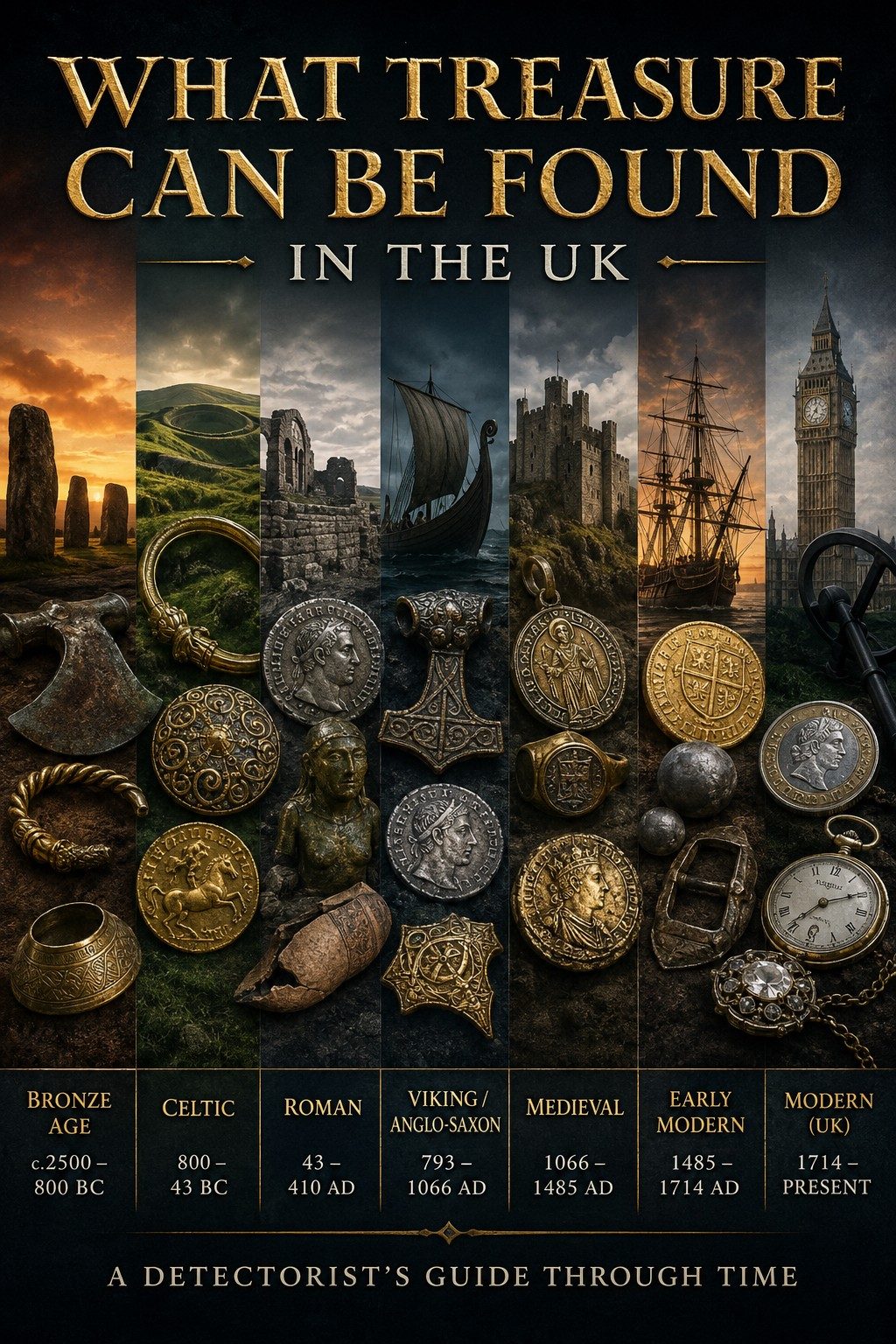
Bronze Age Roughly 2500-800BC
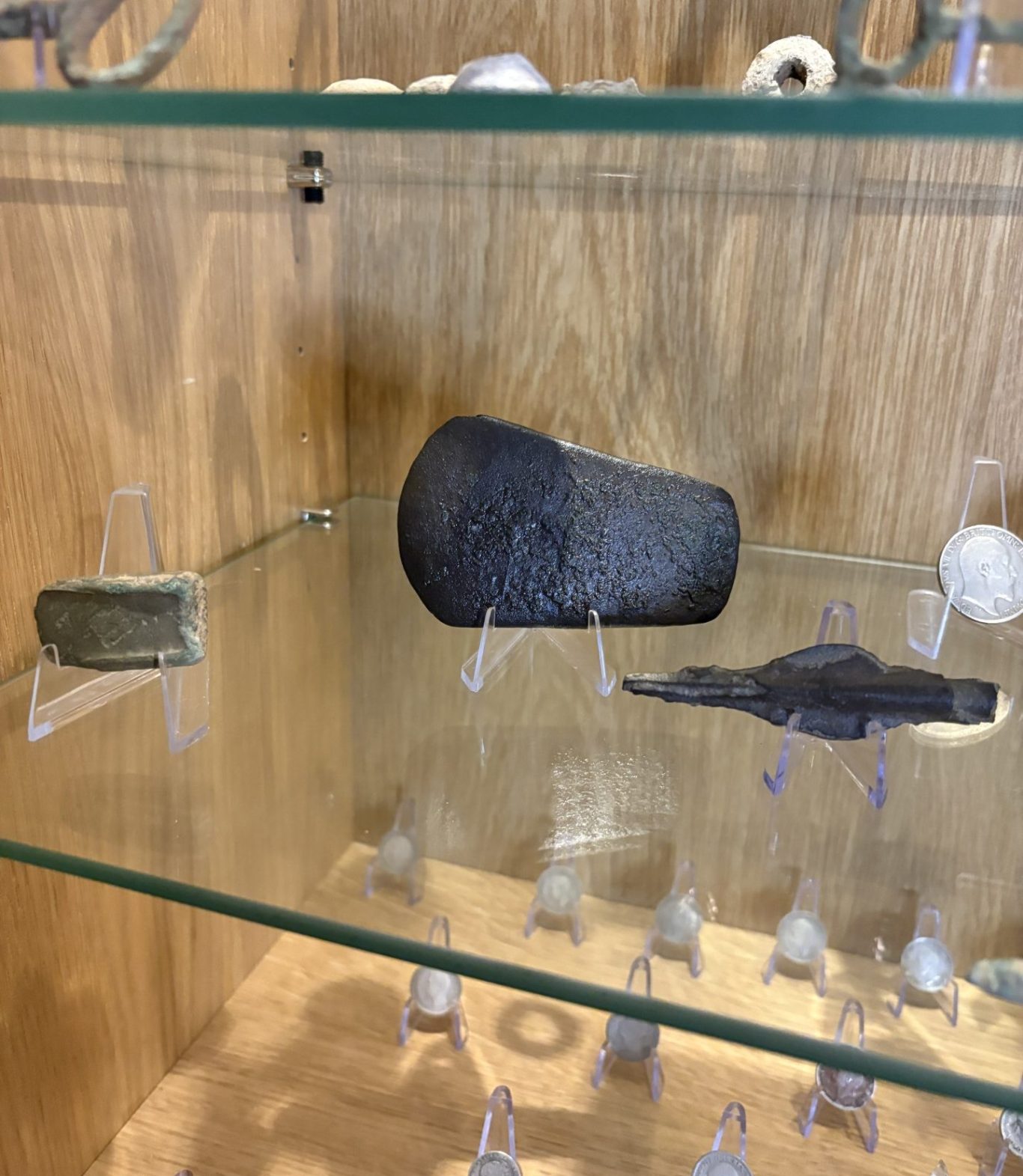
Step back in time to the Bronze Age, a period stretching roughly from 2500 to 800 BC. As a detectorist, every time I uncover artefacts from this ancient era—like a Chalolithic axe head, a Bronze Age spearhead, or a piece of a Palstave—I’m left breathless. These artifacts, shaped by hands from over 4,000 years ago, carry the stories of countless generations. It’s overwhelming to realize that beneath our feet, right here in Britain, history waits patiently to be found. We don’t always appreciate how lucky we are, to walk these fields and hold in our hands the distant echoes of the past. Every discovery is a reminder of just how extraordinary our connection to history truly is.
Celtic 800BC-43AD
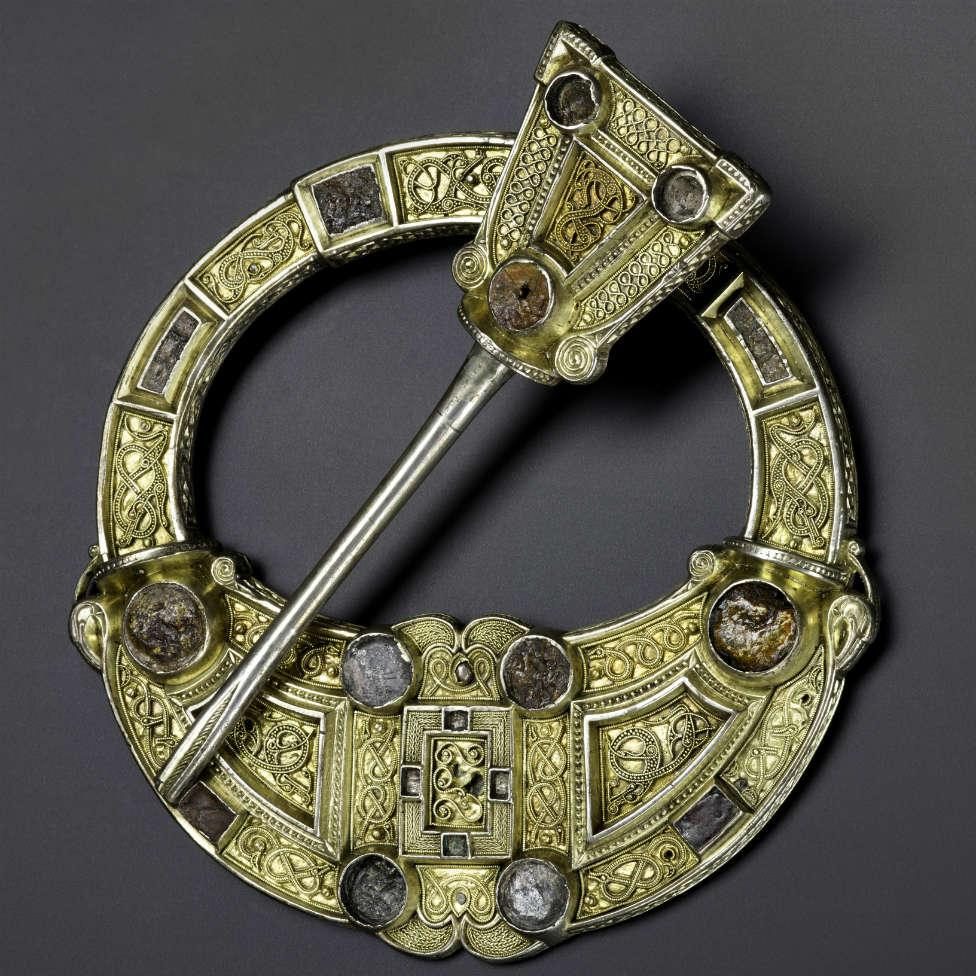
The Celtic Age, spanning from around 800 BC to 43 AD, is a time shrouded in mystery and beauty. Though I haven’t yet held a Celtic coin or artifact in my own hands, every time I walk these fields, I feel their presence in the earth beneath me. Celtic artifacts—ornate torcs, intricate brooches, and shimmering coins—are a testament to a culture rich in art and spirit. I can only imagine the stories behind each spiral, each curve, each delicate detail. One day, I hope to stumble upon one of these treasures, but until then, every step I take is a chance to connect with those who walked this land before me. History whispers here, waiting for us to listen.
Roman- 43-410AD
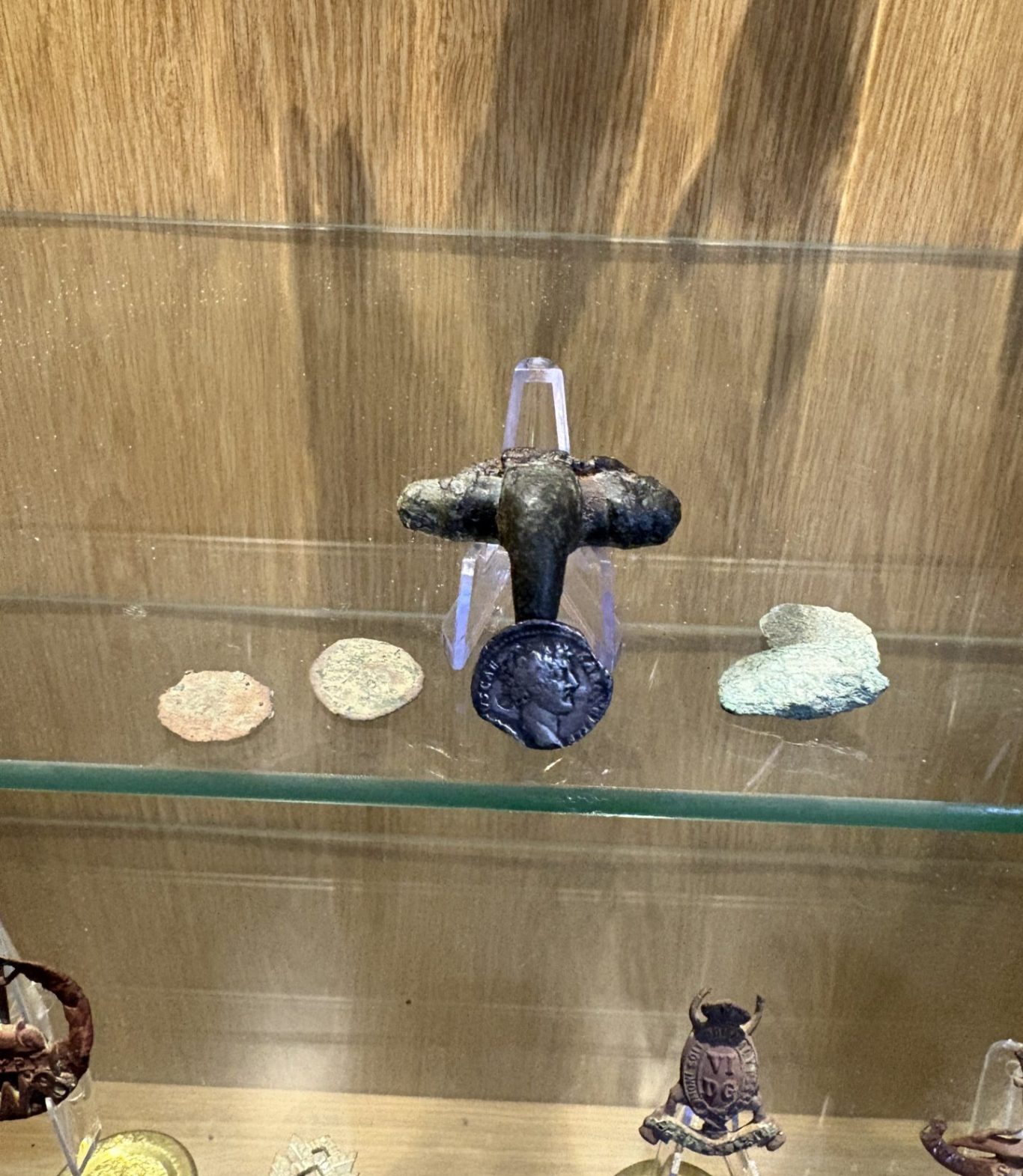
The Roman era in Britain, from 43 to 410 AD, is a time when the island was transformed by empire and innovation. As a detectorist, holding a Roman silver denarius—like the one from Emperor Pius’s reign, even clipped at the edge—feels like a direct link to a bustling past. Alongside it, my dolphin-shaped Roman fibula and copper coins remind me that every field, every step, once echoed with Roman footsteps. These small pieces—tools, tokens, and symbols—connect us to a world of soldiers, traders, and families spread across the empire. Every find is a reminder that even now, beneath our feet, Roman Britain whispers its stories—stories of ambition, artistry, and a vast, changing world.
Viking/ Anglo Saxon- 410-1066AD
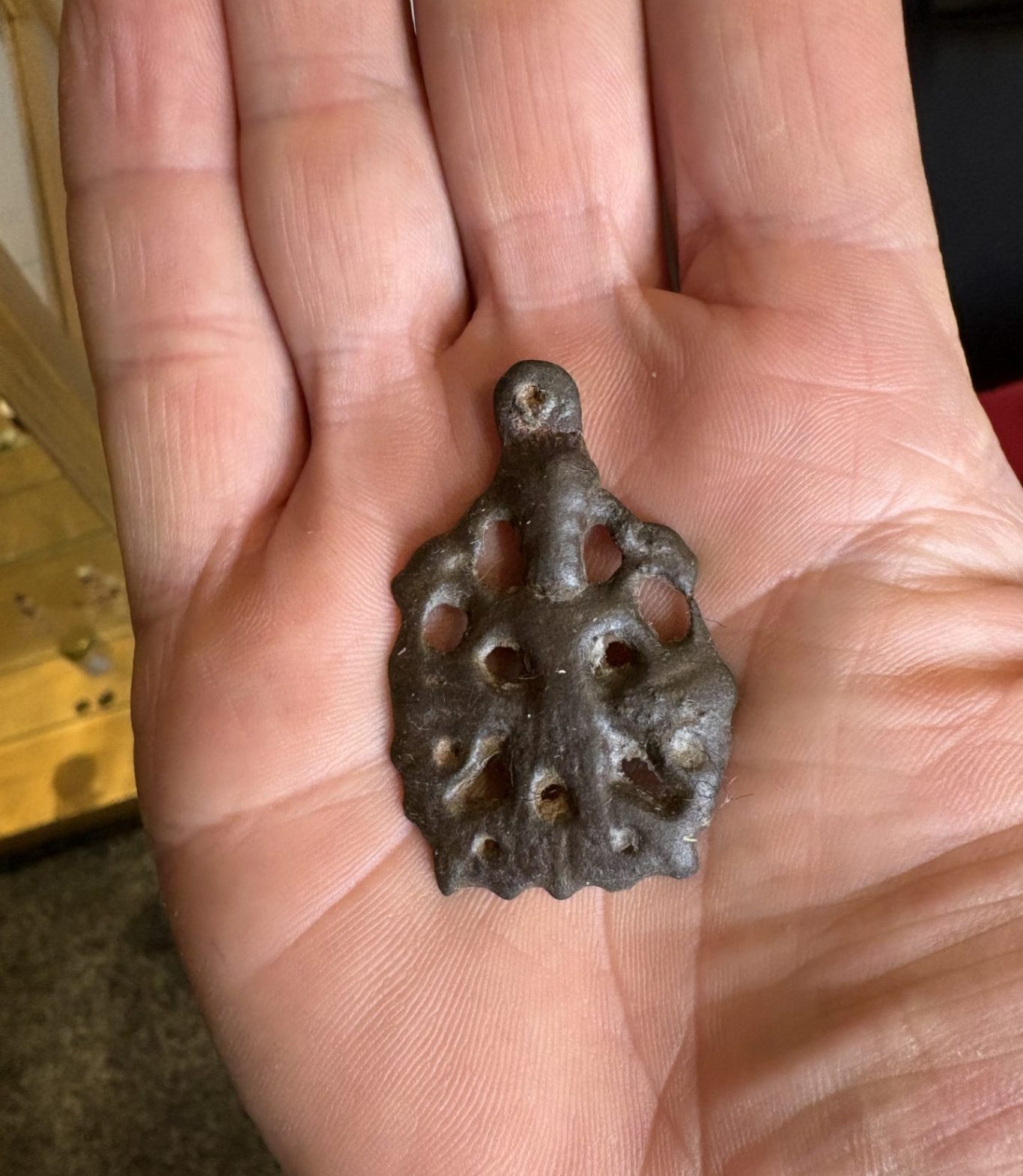
The Viking and Anglo-Saxon age, from 410 to 1066 AD, is a time of dynamic change and clash. As the Romans withdrew, Anglo-Saxon kingdoms rose, only to be reshaped by waves of Viking raiders and settlers. In my hand, I hold a Viking stirrup mount, possibly depicting Odin, a powerful reminder of Norse belief crossing paths with early English faith. It’s awe-inspiring to unearth something so symbolic. Alongside it, we see hammered coins emerging—fragile but vital evidence of these shifting cultures. The fusion of Anglo-Saxon and Viking worlds birthed new art, new trade, and a new era of settlement. With each metal find—whether a brooch, a ring, or a coin—we feel the tension, the faith, and the ambition of a time when two worlds collided. Metal detecting in this period is a journey not just through fields, but through time itself.
Medieval 1066-1485
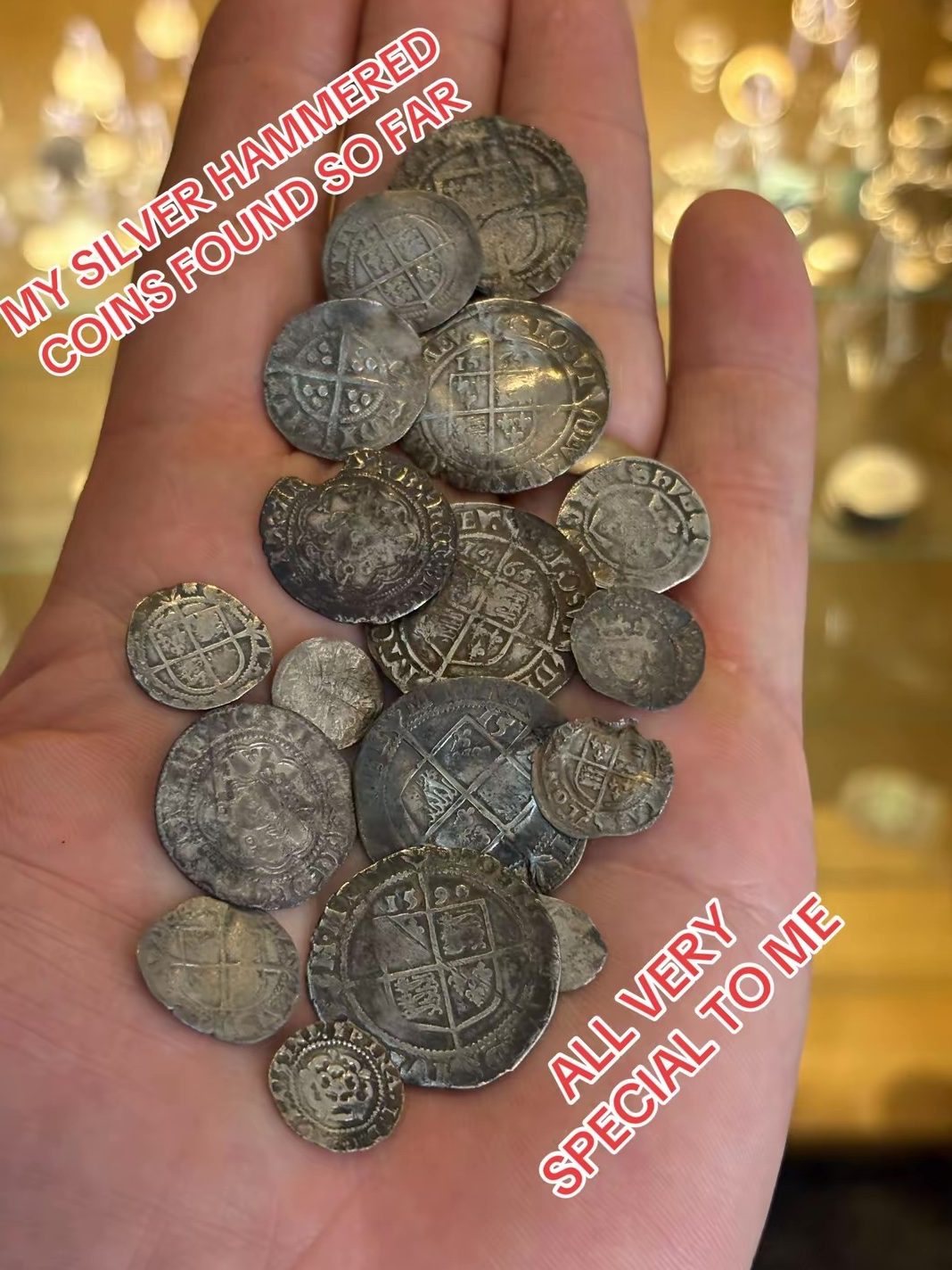
The Medieval period, from 1066 to 1485, is a landscape rich with transformation and craft. As I hold these hammered coins in my hand—a mix of Medieval and early Tudor pieces—I feel the weight of countless stories. Each coin, struck by hand, was once a token of everyday life—of markets, pilgrimage, and royal ambition. But the magic doesn’t stop there. Around me, the fields whisper of spindle whorls, delicate strap ends, and beautifully cast buckles—each one a handcrafted symbol of everyday Medieval life. Metal detecting in this era is a pure thrill: every dig offers a glimpse of individual artistry and a connection to feudal life. These coins, these small treasures, remind us that even the simplest objects carried meaning, hope, and ambition in a world coming into its own.
Early Modern/Modern 1485-1971
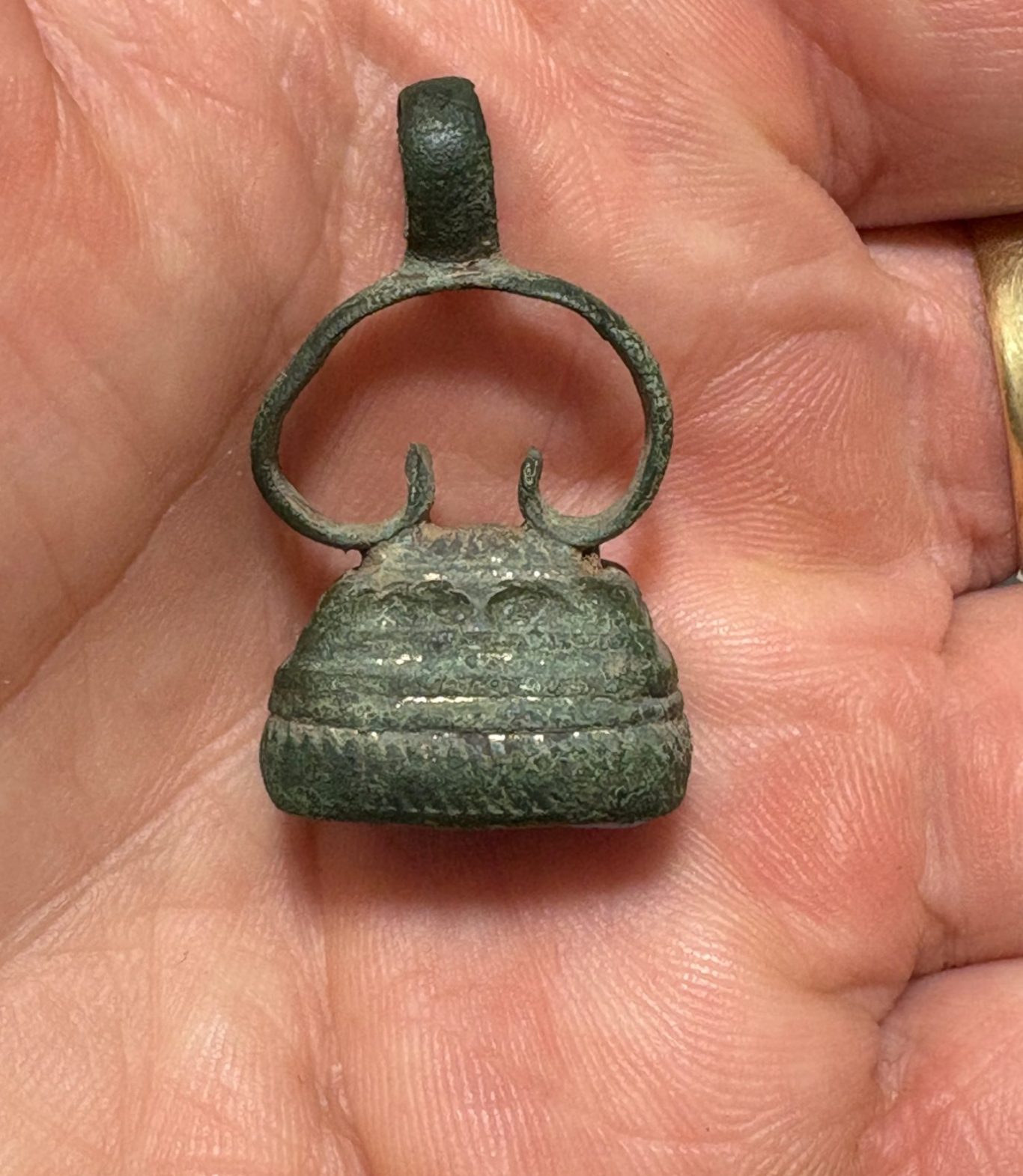
The Early Modern era, from 1485 to around 1750, and on into the Modern period up to the end of pre-decimal currency in 1971, is a bridge between past and present. In my hand, a Georgian fob seal glimmers—a small yet exquisite artifact, a mark of identity from a time of expanding trade and enlightenment. Metal detecting in this period is a treasure hunt for finely milled silver—coins that glisten from the reigns of George, William, and Victoria. I’ve found silver bullet casings and delicate tokens—each one a snapshot of a society in flux. As the Industrial Revolution gathered pace, these coins and trinkets reflect a world of progress—railways, colonies, and a new global economy. Metal detecting now is a link to both personal stories and sweeping change—a chance to hold in your palm a piece of a world that shaped us. Every discovery is a reminder that history is never far beneath our feet.