
FINDING MY VERY FIRST CUT HALF HAMMERED COIN
Welcome back to my week four metal detecting update! If there is one thing I have learned over the past month, it's how much I absolutely love this hobby—there is truly nothing like the thrill of the hunt and the great community around it. This week turned out to be an unforgettable one with some truly great finds, including a massive personal milestone.
I spent the week metal detecting mainly on the outskirts of Brecon, searching on some busy permissions. Because the ground was quite cluttered, I switched to the Minelab Manticore paired with the 9-inch coil. That smaller coil proved to be brilliant for picking through the iron and trash, and it absolutely paid off.
The Breakthrough Finds: Two Cut Halves in 30 Minutes!
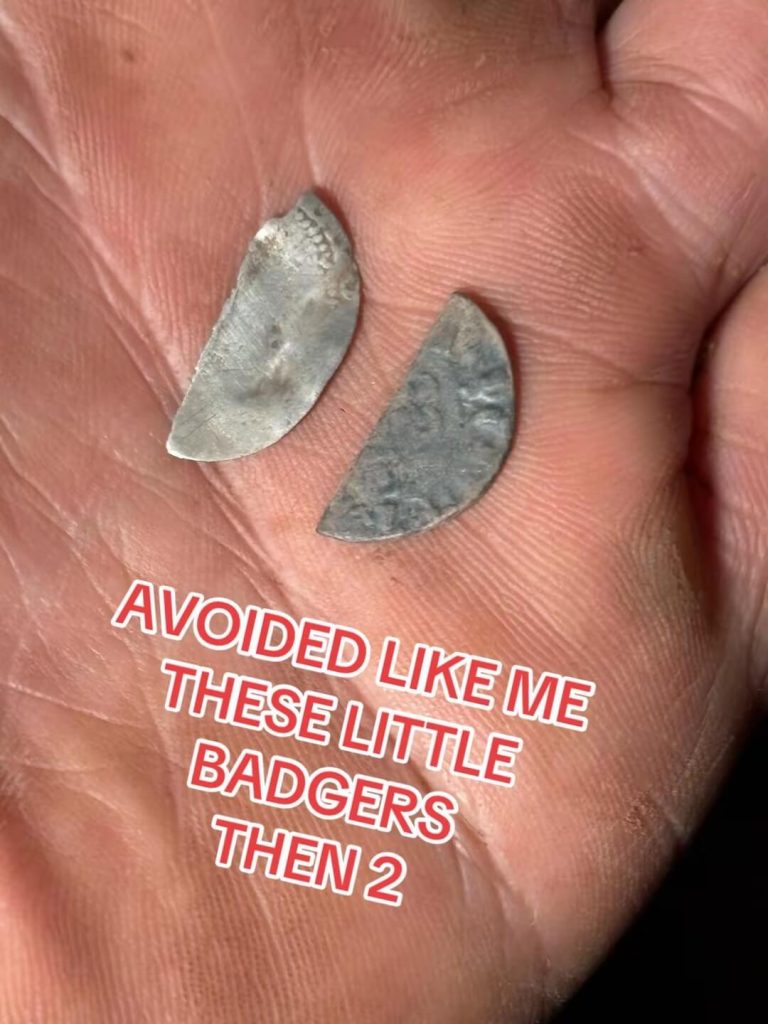
Every metal detectorist remembers the exact moment they find their very first 1/2cut hammered silver coin. I have waited two long years for this milestone, and I still cannot believe what happened next. Not only did I unearth my first-ever "cut half" coin, but I pulled two different ones within the space of just 30 minutes—and caught the entire double-recovery live on TikTok!
For people new to the hobby, finding a half-cut coin might seem like finding a broken object, but these are highly prized pieces of history. In medieval Britain, the mints did not produce lower-denomination coins like halfpennies. Instead, people literally used shears to cut a standard silver penny along the lines of the cross on the back to make everyday change for the market.
Looking at them closely, the history in my palm spans centuries. The coin on the right is my Henry III voided long cross cut half, dating back to the 13th century (1216–1272). The coin on the left is a Queen Elizabeth I cut halfpenny from the Tudor era (1558–1603). Finding a Tudor-era cut half is incredibly rare because by the time Elizabeth I was on the throne, proper small-change minting practices were firmly in place, making these emergency cut pieces a brilliant piece of scarce history.
Bonus Silver: A King Charles I Half Groat!
As if finding the cut half wasn't enough to make this an unbelievable week, the outskirts of Brecon had one more silver surprise waiting for me. I managed to unearth a King Charles I silver half groat!
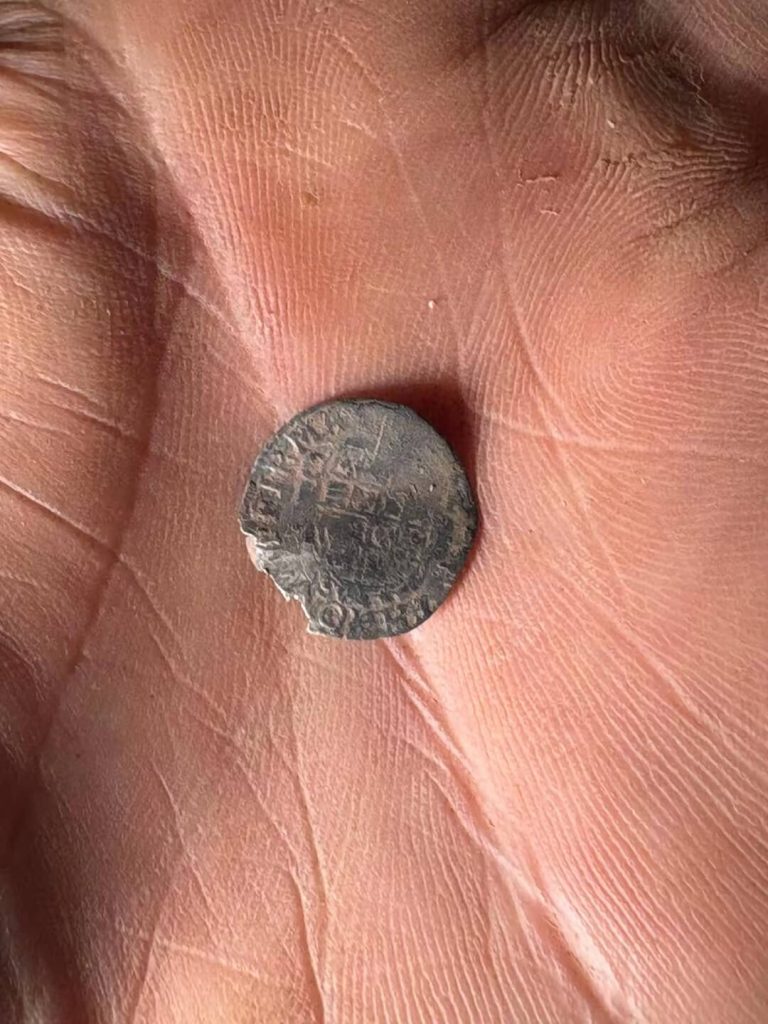
The Minelab Manticore gave a beautiful, crisp signal that punched straight through the busy ground noise to reveal this 17th-century treasure.
🪙 Key Facts About the Charles I Half Groat:
- The Dates: King Charles I reigned from 1625 until 1649. This means this piece of silver survived the turbulent times of the English Civil War and has been lost for roughly 400 years.
- The Value: A half groat was worth two pence (2d) in old English money.
- The Design: These small sterling silver coins were used for everyday transactions. If you look closely at the front (the obverse), you can see the crowned portrait of the King with the Roman numerals "II"stamped behind his head to signify its 2p value.
- The Reverse Motto: The back of these coins features a royal shield surrounded by the Latin inscription “IUSTITIA THRONVM FIRMAT”, which translates to “Justice sustains the throne”.
Watch the Live Dig on TikTok!
There is nothing quite like hearing a deep, clear signal and watching a piece of 400-year-old silver pop out of the clod of dirt. I caught the entire live recovery on camera!
👉 Click here to check out my TikTok to watch the video of me finding this incredible piece of history!Make sure to drop a follow to see all the live action from our weekly permissions!
Relics from the Past: A Georgian Lead Bag Seal
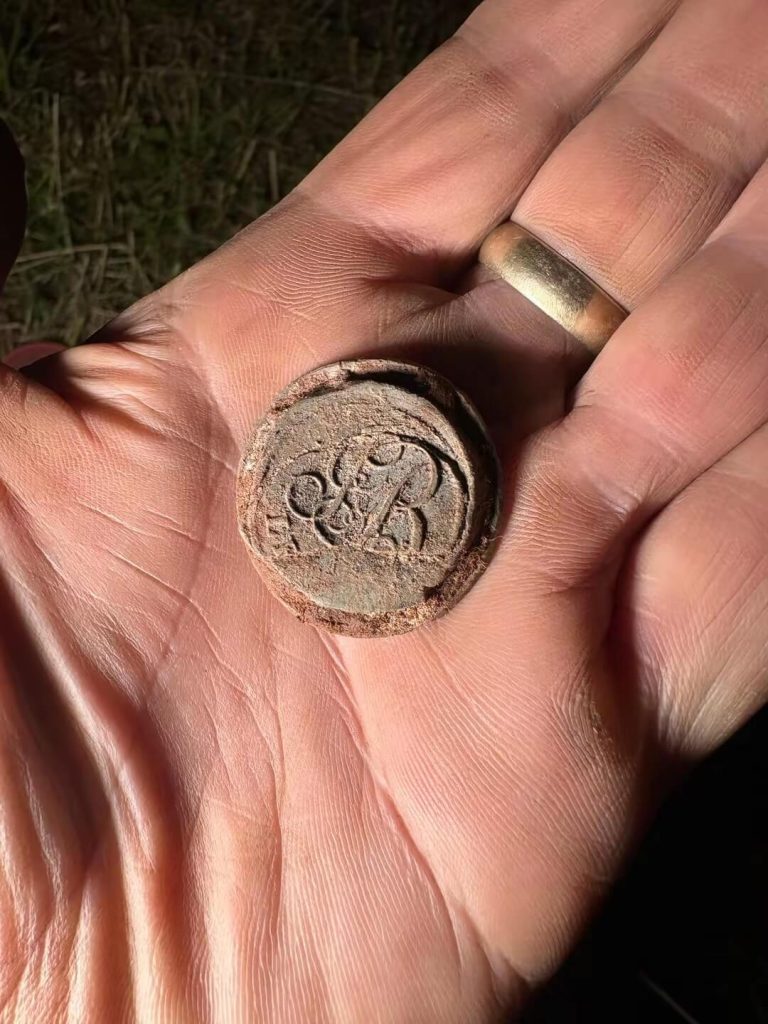
Just when I thought the day couldn't get any more interesting, the Minelab Manticore picked up a nice, heavy lead signal. I dug it up to reveal a beautiful Georgian lead bag seal, often called a cloth or bale seal.
Dating from the 1700s to early 1800s, these small relics were used by merchants to crimp sacks and cloth bales shut against tampering. This particular find features an incredibly crisp, ornate "RB" monogram stamped right into the center. Finding items like this reminds me that metal detecting isn't just about finding old coins—it's about holding everyday history used by real people hundreds of years ago!
Closing Out Week 4: Buckles and Badges
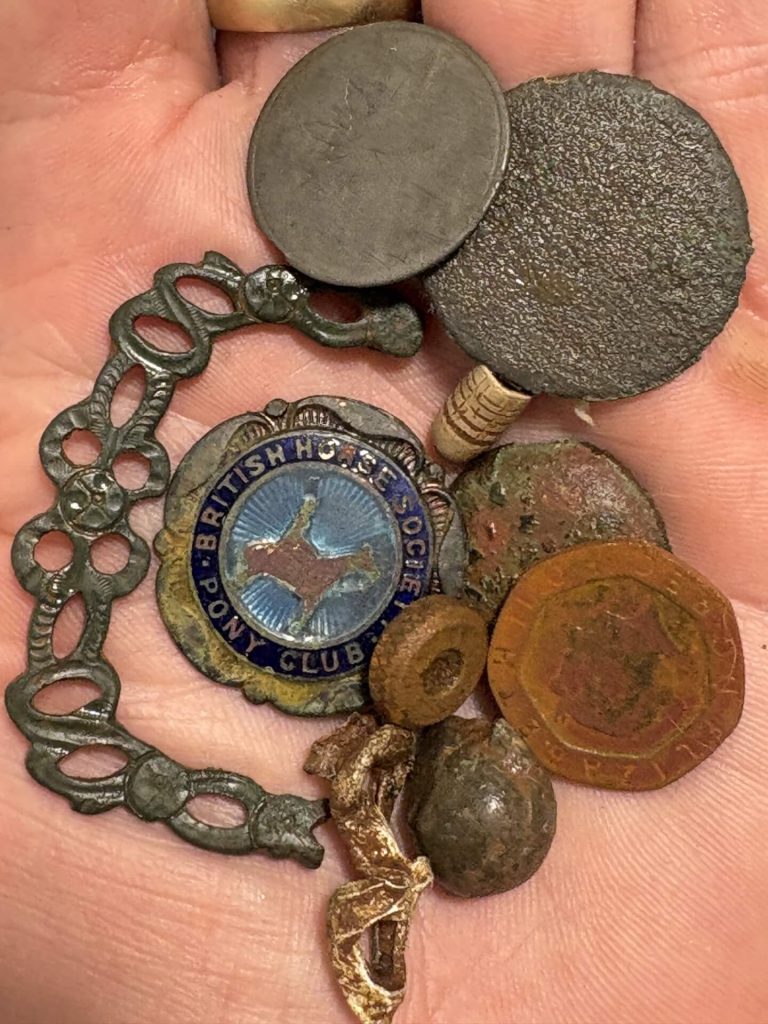
To wrap up an already unbelievable week on the outskirts of Brecon, the fields gave up a few more fantastic relics that tell the story of everyday life across the centuries. Alongside the hammered silver, I pulled an ornate piece of a bronze buckle frame and a fantastic vintage horse club badge.
The buckle fragment features some stunning, detailed openwork molding along the edge and generally dates from the late 1600s to the 1700s. While it is only a partial piece, the level of craftsmanship is incredible, likely starting its life holding together a stylish shoe or a leather utility strap. Right next to it, I picked up a fun modern surprise—a brilliant enamel pin badge from The British Horse Society Pony Club! Complete with its vibrant blue enamel ring and central pony motif, this vintage club badge likely dates to the mid-20th century. It is a fantastic, colorful addition to the week's haul and a great nod to Brecon's rich equestrian history.
What an absolute whirlwind of a week. While I have been lucky enough to find hammered silver before, crossing my very first "cut half" off the bucket list—let alone pulling two different centuries of history within 30 minutes live on camera—is a milestone I will never forget. Moving from the 13th-century fields of Henry III to the Tudor reign of Elizabeth I, the Stuart era of Charles I, and right through to Georgian lead seals and vintage horse badges, this permission on the outskirts of Brecon has been incredibly kind to us.
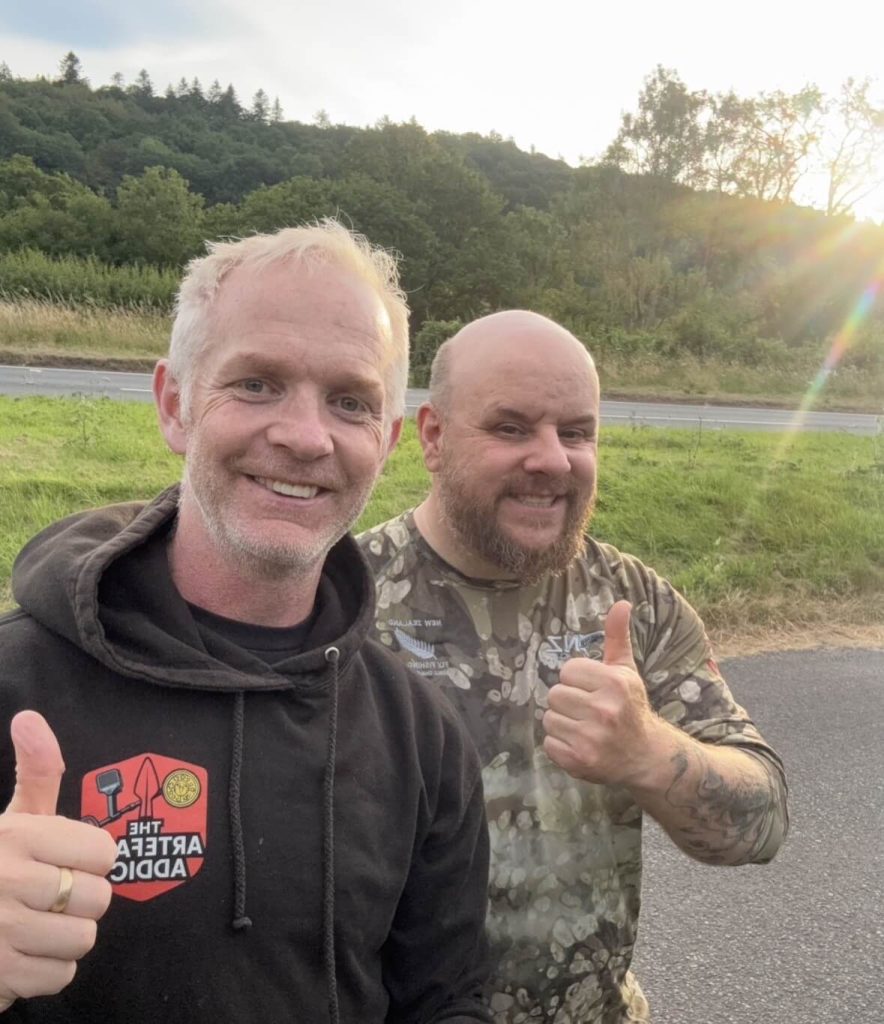
It just goes to show that slowing down, using the right setup like the Minelab Manticore with that nimble 9-inch coil, and putting in the hours with great company like Terry is what this hobby is all about. I am completely buzzed after this week and cannot wait to see what week five has in store for us.